
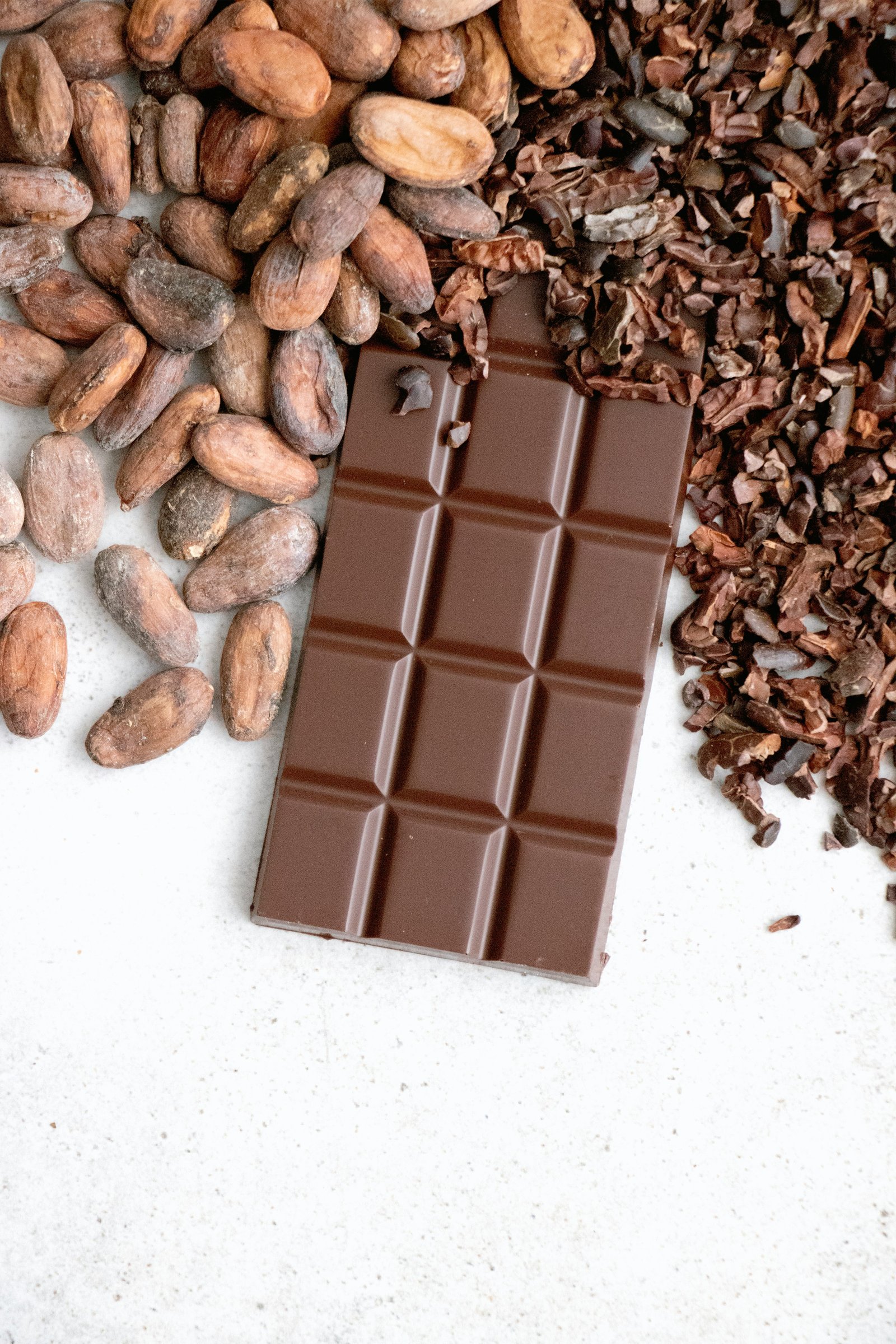
Cocoa: is the three-week fall here to stay?
London cocoa fell 15.1% in a month, to GBP 3,632 per tonne on 10 November 2026 (ICE London). The market is asking: do rising exchange stocks keep pushing prices down, or do a very strong El Niño and fund bets on falling prices push them back up?
The short answer
A tie: scenario A (prices keep falling) and scenario C (prices rebound). 3 of the 6 signals that show a clear direction point to each of them and none points to scenario B (a stall). 5 more signals have no clear reading yet.
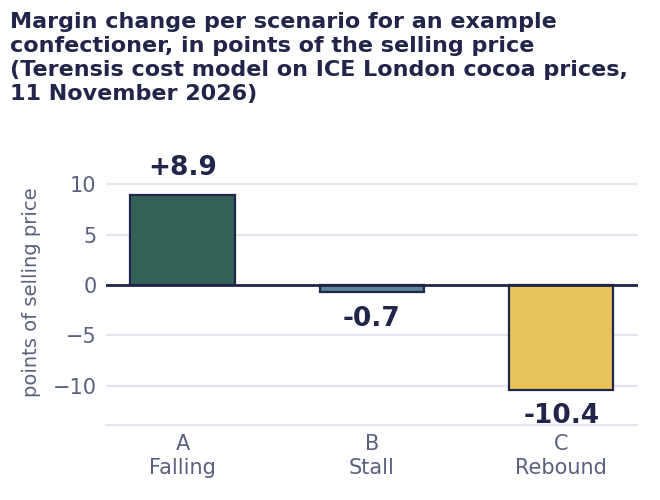
For an example confectioner, falling prices leave EUR 8.92 more of every EUR 100 of sales as margin, compared with the cocoa cost already in the selling price. A rebound would cost EUR 10.38. Even if prices stall, EUR 0.73 less stays.
What to do: buy in monthly steps over the next 12 months and keep a part open until the tie breaks.
The three scenarios
Signals = the share of the 6 signals with a clear direction that point to the scenario (5 more have no clear reading); this is not a statistical chance. Cocoa price = what you pay for cocoa not yet bought over the next 12 months (ICE London, 10 November 2026, in euros per tonne). Margin change = percentage points of the selling price, an example confectioner, selling price unchanged (part 3).
Read the full Margin Call
Leave your email address to read the scenarios in detail, the evidence behind every signal and the cost model, and to download the PDF.
We use your email address to give you access and to follow up on this Margin Call. You can object at any time. More in our privacy policy.
1. Which scenario is most realistic? A tie: scenario A (prices keep falling) and scenario C (prices rebound)

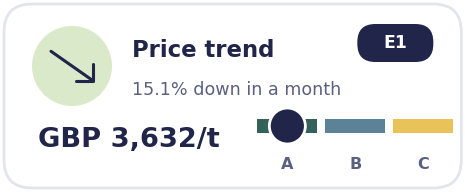
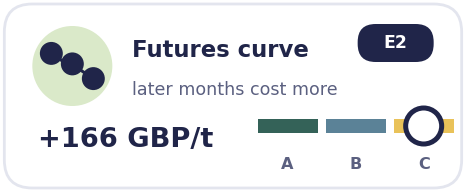
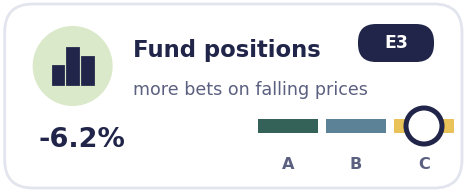

Source: publishers and dates in part 5; readings dated 3 November 2026 to 10 November 2026. Click a card to jump to its evidence.
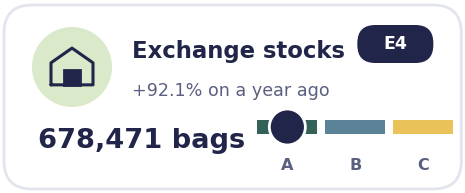
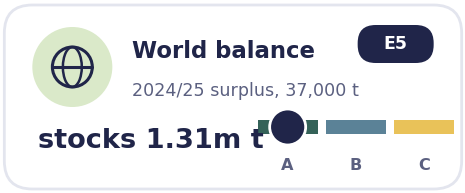
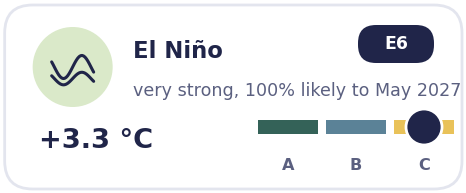
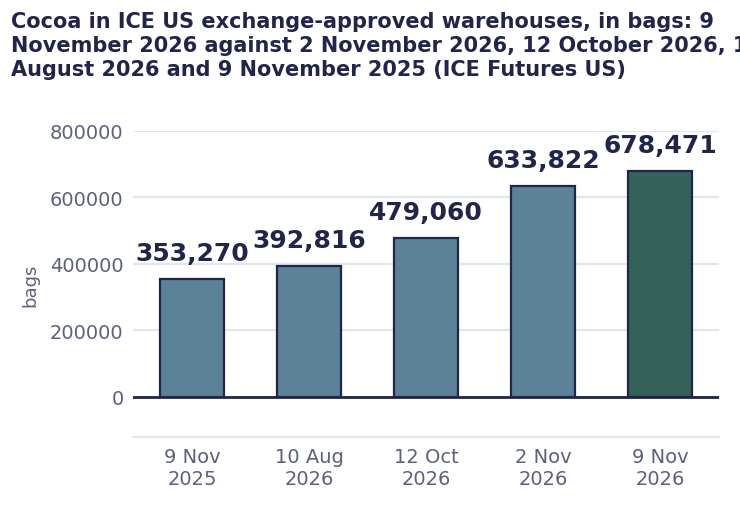
Why A: exchange stocks are at 678,471 bags, 92.1% above a year ago, the world had a surplus in 2024/25, and the price is below its 20-, 50- and 100-day averages. Why C: a very strong El Niño is under way, funds hold more bets on falling prices than on rising ones (buying them back could lift prices), and later months cost more than nearby months. What would break the tie: the weekly exchange stock readings and ICCO's 2025/26 figures, which it has withheld. Our reading: the three-week fall has run on rising exchange stocks, so the next stock readings matter most.
2. How does the other scenario answer the question?
| Scenario | What this scenario says | What we would see first | Signals |
|---|---|---|---|
| Scenario B: prices stall | The fall stops here. It is not lasting, and it is not the start of a rebound. | Exchange stocks stop rising; European grindings keep growing after the 3.2% rise in the quarter to 30 September 2026. | 0 of 6 |
Source: signals in part 1, readings dated 3 November 2026 to 10 November 2026. 'What we would see first' is our reading.
3. What do the scenarios mean for my margin?
Base and how to read the numbers
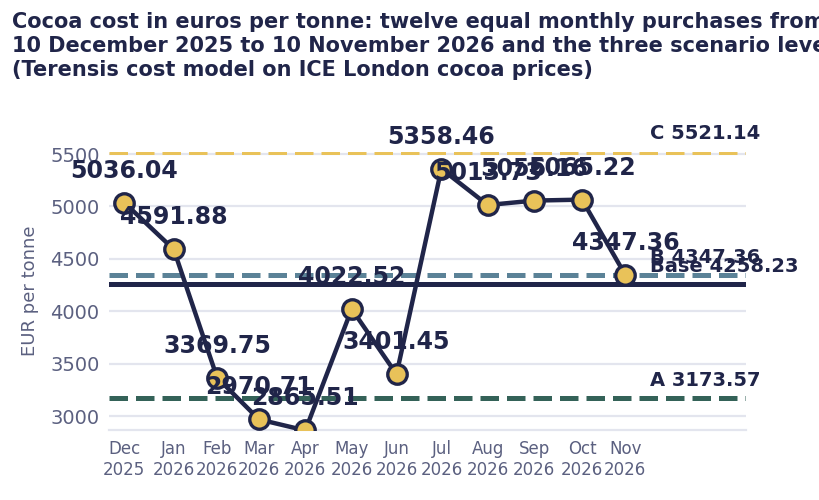
Base: the cocoa cost that is already in the selling price today: EUR 4,258 per tonne of cocoa, the average of twelve equal monthly purchases from 10 December 2025 to 10 November 2026.
How to read the numbers: "-2.0" means that of every EUR 100 of sales, EUR 2 less stays as margin. "+1.0" means EUR 1 more stays. The selling price is assumed unchanged. An example confectioner: cocoa is 35% of the selling price, all other costs and margin 65%. Only cocoa moves; sugar, dairy, energy, packaging, labour and margin stay as they are today.
Even if prices stall (scenario B), margin falls by 0.73 points, because today's price, EUR 4,347 per tonne, is above the average of the purchases in the base, EUR 4,258. The base includes purchases at EUR 5,358 on 10 July 2026 and EUR 5,065 on 12 October 2026, and others as low as EUR 2,866 on 10 April 2026.
4. What should I do now?
Not in one step. Falling prices and a rebound are equally likely on today's signals. Three moves work in both cases:
What would change the call: ICE London cocoa settlement price
Three open questions
- Demand. Do European grindings keep rising after +3.2%? Answer: the next quarterly grindings figures of the European Cocoa Association.
- Weather. Does the dry season damage the main crop? Answer: rainfall and crop reports until 28 February 2027, the end of Ghana's dry-season window.
- Supply. Was 2025/26 a surplus again? Answer: ICCO's 2025/26 production and grindings figures, withheld in its latest bulletin.
5. Evidence
| Signal | Reading | Publisher and date | Points to |
|---|---|---|---|
| E1 Price trend ↑ | GBP 3,632 per tonne, 15.1% below a month ago and 3.8% down on 10 November 2026; below its 20-, 50- and 100-day averages (GBP 4,129, 4,202 and 4,213), above its 200-day average (GBP 3,489). | ICE London, settled 10 November 2026 | Scenario A |
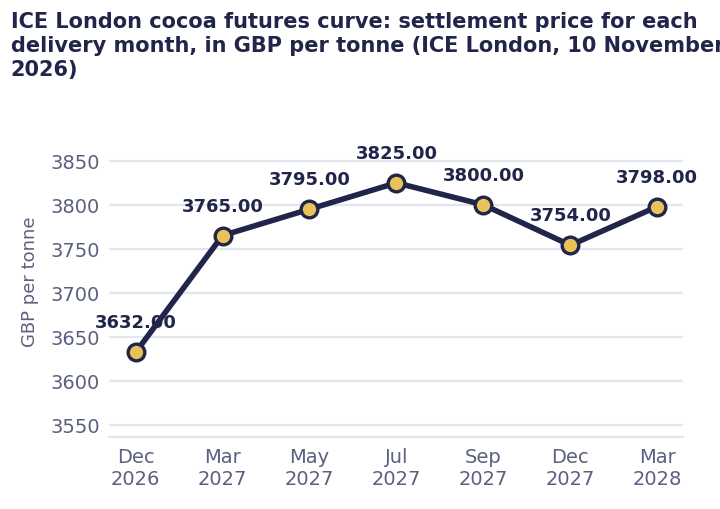
| E2 Futures curve ↑ | December 2026 GBP 3,632, March 2028 GBP 3,798 per tonne: later months cost more (GBP 166 per tonne across the curve). | ICE London, settled 10 November 2026 | Scenario C (our reading) |
| E3 Fund positions ↑ | Investment funds hold more bets on falling prices than on rising ones: -6.2% of open interest on ICE US cocoa (1.3 standard steps below the 3-year average) and -3.8% on ICE London cocoa, 3 November 2026. | CFTC; ICE Futures Europe, 3 November 2026 | Scenario C (our reading) |
| E4 Exchange stocks ↑ | 678,471 bags on 9 November 2026, 92.1% above a year earlier and 41.6% above four weeks earlier; higher than on 96% of the same days of the year since 2016. | ICE Futures US, 9 November 2026 | Scenario A |
| E5 World balance ↑ | 2024/25: production 4.733 million tonnes (+8.5%), grindings 4.649 million tonnes (-3.3%), a surplus of 37,000 tonnes; end-of-season stocks 1.309 million tonnes, 28.2% of grindings. ICCO has withheld its 2025/26 figures. | ICCO, Quarterly Bulletin press release, August 2026 | Scenario A |
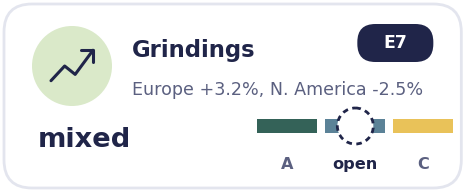
| E6 Grindings ↑ | Europe: 348,215 tonnes in the quarter to 30 September 2026, 3.2% above the same quarter of 2025, after seven quarters of decline. North America: 109,978 tonnes, 2.5% below. | European Cocoa Association; National Confectioners Association, quarter to 30 September 2026 | open |
| E7 El Niño ↑ | Very strong; 100% probability to May 2027; Niño 3.4 +3.3 °C in the week of 14 October 2026. Ivory Coast yield was 4.0% lower per +1 °C of the El Niño index over 1961 to 2024; the 2026 crop is expected 4.3% below trend. In Ecuador, 3.1 million hectares are at medium to high risk of heavy rain and landslides. | IRI, 19 October 2026; FAOSTAT 1961 to 2024, Terensis analysis, 11 November 2026; Commodity3, 5 November 2026 | Scenario C |
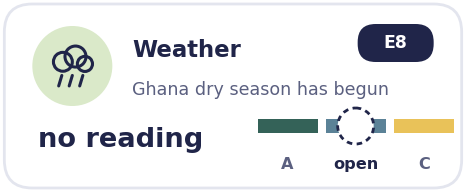
| E8 Weather ↑ | Ghana's dry-season window runs from 1 November 2026 to 28 February 2027 and is open; no rainfall limit is set for it. Ivory Coast's rain-sensitive windows start on 1 April 2027. | Terensis crop-window review, 3 November 2026 | open |
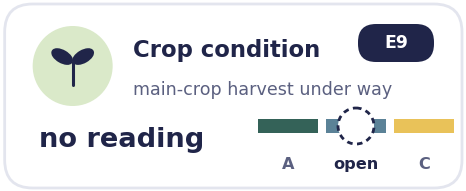
| E9 Crop condition ↑ | The main-crop harvest is under way in Ivory Coast (1 October 2026 to 31 March 2027) and Ghana (1 September 2026 to 31 March 2027). There is no crop condition rating to read yet. | Terensis crop calendar, 11 November 2026 | open |
| E10 Currency ↑ | No reading. | Federal Reserve | open |
| E11 Seasonal pattern ↑ | No reading. | ICE London, 10 November 2026 | open |
Source: publishers as named in each row, readings dated 3 November 2026 to 10 November 2026. A = scenario A (prices keep falling), B = scenario B (prices stall), C = scenario C (prices rebound). 'Our reading' marks a judgement; all other readings are measured. 'open' = no clear direction. Observed weather in the growing regions and the sterling rate: Due to technical problems, this data was not available at the time of writing.
| Cost model of an example confectioner | Share of selling price | How it is priced |
|---|---|---|
| Cocoa | 35% | ICE London cocoa futures in euros. Base: twelve equal monthly purchases, average EUR 4,258 per tonne. Each scenario: the same twelve purchases at the scenario price. |
| Sugar | 15% | Held unchanged. |
| Dairy ingredients | 10% | Held unchanged. |
| Energy | 4% | Held unchanged. |
| Packaging | 8% | Held unchanged. |
| Labour and margin | 28% | Held unchanged. |
Source: Terensis cost model, 11 November 2026. The shares are an example from a provisional template.
See the margin impact on your products
Same scenarios, your own cost model.
What are you preparing for?
Notes. Metric units; ICE London quotes cocoa in GBP per tonne; euro prices use the exchange rate of the day of each price. One standard price move = the realised price swing of the last 20 trading days of the main-crop contracts, 27.0% a year (ICE London, 10 November 2026), scaled to 12 months: 27.0% x the square root of 12/12 = 27.0%; scenarios A and C are one move below and above scenario B. Only cocoa moves in the cost model; the other cost items are held unchanged. Terensis Virtual Agronomist describes market conditions and example cost structures; it is not investment advice. Sources: ICE London (cocoa futures and curve, 10 November 2026); ICE Futures US (certified cocoa stocks, 9 November 2026); CFTC (Commitments of Traders, 3 November 2026); ICE Futures Europe (Commitments of Traders, London cocoa, 3 November 2026); ICCO (Quarterly Bulletin of Cocoa Statistics, press release, August 2026); European Cocoa Association (European grindings, 30 September 2026); National Confectioners Association (North American grindings, 30 September 2026); IRI, Columbia University (ENSO Quick Look, 19 October 2026); NOAA Climate Prediction Center (ENSO discussion, 15 October 2026); FAOSTAT (Ivory Coast cocoa yields 1961 to 2024, Terensis analysis, 11 November 2026); Barchart (cocoa market report, 10 November 2026); Commodity3 (Ecuador cocoa and El Niño, 5 November 2026). Photo: Tetiana Bykovets, Unsplash; Kawe Rodrigues, Unsplash.
DISCLAIMER
The information contained in this report is based on data obtained from proprietary, commercial, government and statistical organizations, which Terensis believes to be reliable. While Terensis strives for accuracy, all forecasts, analyses, and assessments or other information in this report are provided "as is" without any warranty of completeness, correctness, applicability or fitness for any specific purpose. In particular, the recipient of this report acknowledges that agricultural, weather, environmental, social and other relevant conditions are inherently uncertain and subject to variables beyond the control of Terensis. Therefore, the recipient assumes full responsibility for any decisions made based on this report. To the fullest extent permitted by law, Terensis excludes all liability for any damages arising in connection with this report. No investment advice.